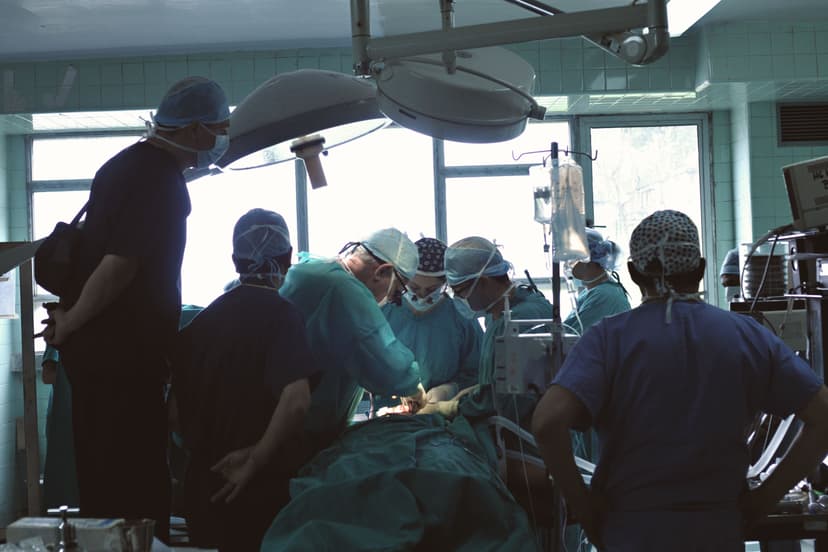
The nurse who's been in your OR for twelve years knows exactly where this is heading. She's done the math herself. She's covering two roles again. The new scrub tech needs watching. The schedule is already behind, and it's not yet 9am.
Projections for 2025 point to a shortage of 78,610 full-time registered nurses in the US - with some estimates running as high as 200,000 to 450,000.1,2 In the OR, that gap doesn't show up as a headline. It shows up as turnover times that keep slipping. Surgeons who can't get the efficiency they expect. Overtime that accumulates, quietly, until someone decides they've had enough.
The schedule absorbs what the team can't
Staffing pressure doesn't arrive as a crisis. It arrives as a series of small slowdowns that add up by afternoon.
A first case that starts eight minutes late because a new team member needed a walkthrough. A turnover that takes four minutes longer than it should. A surgeon who doesn't say anything, but whose frustration is visible. By mid-morning, the schedule is running behind. By the end of the day, staff are in overtime, and the same people who absorbed the morning's friction are still absorbing it now.
Less experienced teams don't make care worse on purpose. They make it slower. In a surgical environment where throughput is measured in minutes, slower is expensive - for the schedule, for staff, and for the facility.
The costs that don't appear on a single budget line
Agency fees and overtime premiums are visible. The compounding effect is not.
When experienced nurses absorb the workload left by unfilled positions, their attention is divided, their satisfaction drops, and their likelihood of leaving accelerates. One vacancy creates the conditions for the next. Replacing a single experienced OR nurse takes months and costs more than most facilities budget for.
Two hours of overtime saved per OR per day can translate to $700-$1,4003 in daily savings per room. For a facility running six active ORs, that adds up fast - before accounting for avoided agency spend, reduced turnover costs, or the cases that actually get done on time.
What the data can tell you that the debrief can't
After a difficult day, perioperative leaders have the same uncomfortable conversations about who was slow, what slipped, and where it broke down. The answers are usually incomplete because the information available is incomplete.
Analytics change what's visible. They show which case types slow down with certain team configurations, where transitions add unnecessary time, and which staffing patterns lead to smoother days. These insights don't come from a post-shift debrief. They come from data gathered across hundreds of cases, surfaced in a form that leaders can act on.
The conversation shifts. Leaders can see exactly what happened - by case type, by team, by day - and make staffing decisions based on evidence. What the data shows. Not what the loudest voice in the room recalls.
Getting less experienced staff productive, faster
New team members aren't the problem. The problem is the gap between when they arrive and when they can operate independently, and how much of a senior nurse's attention that gap consumes in the meantime.
Point-of-care guidance closes that gap faster. Preference cards. Procedural steps. Instrument requirements. The information a new scrub tech needs to do the job well, available at the moment they need it, without pulling an experienced nurse out of the sterile field to deliver it.
Over time, this embeds a shared standard for performance across the OR - built from your own cases, your own processes, your own surgeons. Staff who onboard into a structured, documented environment reach independence faster. The people training them carry less of the load.
Returning time to the people who need it
Nurses already spend up to 40% of their shift on documentation4. Add manual coordination on top of that - chasing room status, alerting transport, tracking case progress across departments - and the workload becomes unsustainable. The charge nurse becomes a switchboard. Clinical attention goes to coordination instead of care.
When operational milestones are captured automatically and the right information reaches the right team at the right moment, that changes. The charge nurse spends less time fielding calls. Staff spend less time compensating for a system that was never designed to support them.
Staff who feel the system works for them stay longer. The value of an experienced OR team that has worked through hundreds of cases together is something no hiring pipeline can quickly replace.
How Caresyntax supports this
Caresyntax connects OR devices, clinical workflows, and case data into a single perioperative intelligence platform. The analytics layer identifies where time is lost - by case type, team configuration, and surgeon - and surfaces patterns that post-shift debriefs cannot. Point-of-care guidance gives less experienced team members access to preference cards, procedural steps, and instrument requirements at the moment they need them, reducing reliance on senior staff during active cases. Automated milestone capture tracks key workflow events in real time, so the right people are informed without manual coordination.
The nursing shortage is not going away. But its impact on OR performance is not fixed. When the information infrastructure works, the people running the OR can.
References
1. Health Resources and Services Administration (HRSA). Nurse Workforce Projections, 2020. Nationally projected shortage of 78,610 FTE RNs in 2025. bhw.hrsa.gov
2. McKinsey & Company, 2022. Projected US nursing shortfall of 200,000–450,000 RNs by 2025. Cited via Nurse.org: nurse.org
3. ScrubUp. Surgical Time Cost & Patient Risk. OR overtime savings of $700–$1,400 per OR per day based on 2 hours saved. scrubupapp.com
4. U.S. Surgeon General’s Advisory on Building a Thriving Health Workforce. Nurses spend approximately 40% of their shift on documentation. Via AACN: aacn.org