.png&w=3840&q=75)
One in three team exchanges in the operating room involves a communication failure.
Most go unnoticed until the schedule has already slipped.
A missed update does not announce itself. A patient is ready for transport. A room has cleared for turnover. An anesthesia team is working from case notes that changed an hour ago. Individually, each gap is small. Across a surgical day running multiple rooms in parallel, they compound into idle time, delayed cases, and clinical staff absorbing coordination failures that should never reach them.
Where handoffs break
Communication is most vulnerable at transition points, where responsibility shifts between teams with limited shared visibility.
Anesthesia teams work from case information that may not reflect current procedure status. Environmental services wait for a turnover signal that depends on someone remembering to send it. Pre-op teams estimate OR readiness rather than knowing it. Patient transport operates on an informal relay that breaks whenever the person in the middle is occupied with something else.
A five-minute delay in a turnover signal, multiplied across ten cases, reshapes a surgical day. Clinical staff compensate through calls, corridor conversations, and manual status checks - coordination work that runs parallel to, and competes with, direct patient care.
Manual coordination has a ceiling
The conventional model relies on individuals to notice changes, make the call, and keep teams aligned. In single-room environments with predictable volume, it holds. In multi-room environments running concurrent procedures, the failure rate scales with complexity.
The staff absorbing this burden are the same staff responsible for patient safety. When coordination demands increase, something takes the excess load — and it is rarely a task that can safely be deprioritised.
Replacing the manual relay
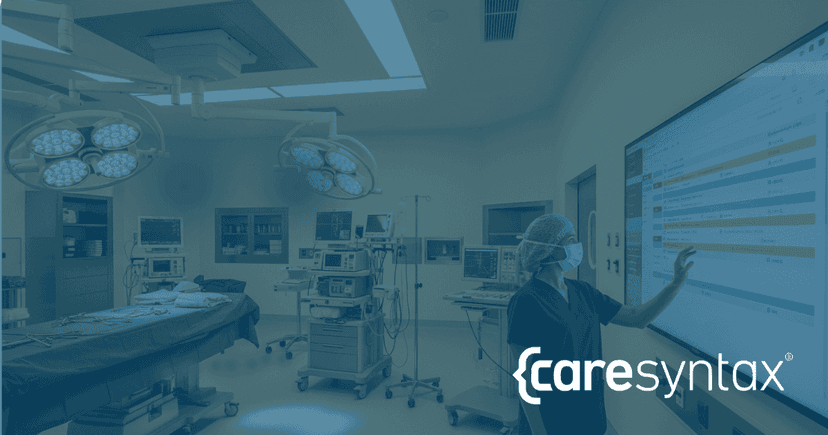
Caresyntax captures operational milestones across the surgical day - patient in room, procedure underway, room cleared for turnover, case closed - and distributes real-time notifications to the specific teams that need them, at the moment they need them. Surgeons and anesthesia teams receive patient status updates without making a call. Environmental services get a turnover signal the moment the room clears. Pre-op and transport teams see current OR status, not an estimate based on the last conversation.
No manual relay. No version of events that is already out of date by the time it arrives.
At Caresyntax client sites, this model has contributed to OR throughput improvements of up to 10% and pre-anaesthesia checklist adherence improvements of 80% at individual deployments. The gains come from removing friction, not adding resource.
A systems problem with a systems fix
Communication failure in surgical teams is not a people problem. Clinicians and coordinators managing today's ORs are not failing at their jobs. They are working within a model that places coordination tasks on individuals that should be handled by infrastructure.
When the right update reaches the right team at the right moment, the surgical day runs differently. Turnover tightens. Idle time shrinks. Clinical attention goes where it belongs.
See How Caresyntax Can Help Your Business
Learn MoreRelated articles

9 Advantages Of Open Ecosystems In Healthcare
April 14, 2026·5 min read
.png&w=828&q=75)
The Equipment Delay Hospitals Don't Budget For, But Ultimately Pay For
March 27, 2026·5 min read
The Hidden Operational Cost of OR Staffing Shortages and How to Reduce It
February 11, 2026·5 min read