SDI vs. Video over IP: Choosing the Right Infrastructure for a Future-Ready OR
|5 min read
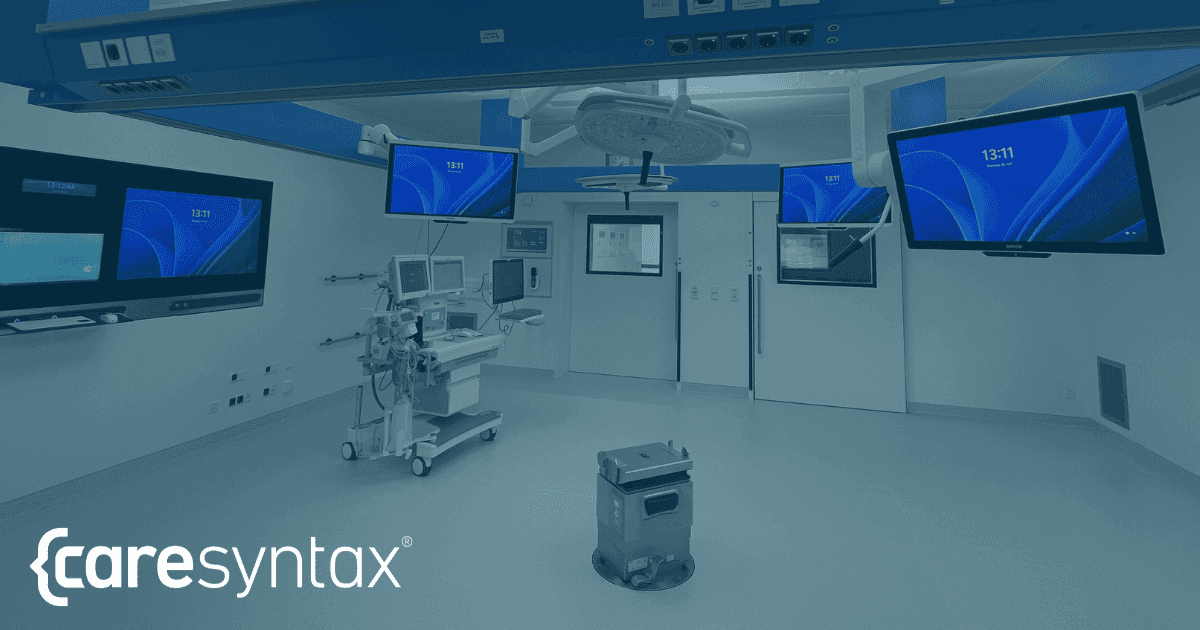
As healthcare organizations increasingly modernize their operating rooms (ORs), a crucial technical decision must be made: should the video infrastructure rely on traditional SDI (Serial Digital Interface) or transition to Video over IP (Internet Protocol)? This is a choice affecting scalability, interoperability, and the long-term return on investment (ROI) of surgical integration systems. Here, we will review the potential of each system and drawbacks to consider when making your decision.
Understanding SDI Technology
SDI is a well-established technology developed for transmitting uncompressed digital video signals. It’s widely used in broadcast environments and has proven extremely reliable in medical settings. SDI systems are known for their:
- No-latency video transmission
- High reliability and immunity to interference
- Intrinsic security due to closed-loop architecture
However, SDI systems are often criticized for limited scalability and installation complexity. Retro-fitting a system for upgrades such as 4K or 8K resolution requires changing cables and possibly entire matrix systems, which can be costly and time-consuming. This makes SDI less flexible to meet evolving OR needs.
Video over IP Capabilities
Video over IP refers to transmitting video, audio, and data over standard Ethernet networks. This technology is increasingly favored in industries like broadcasting and Pro AV systems, and is now making inroads into healthcare for its ability to support smart ORs and digital transformation initiatives. Its main advantages include:
- Highly scalable and flexible infrastructure for incorporating future innovations
- Bi-directional communication for device telemetry and monitoring
- Future-proof, supporting resolutions up to 8K and integration with AI and robotics
- Streamlined upgrades, quickly add or swap encoders, decoders, or switches for reduced downtime
IP systems require robust cybersecurity however, and performance can vary depending on the quality of switches and network design. Installation can also be affected if noncompatible legacy cabling cannot be easily swapped out.
When SDI Is the Right Choice
SDI remains a strong option for ORs in certain circumstances, including when:
- Ultra-reliable, no-latency video transmission is required, as in instances such as microsurgeries or critical real-time decisions.
- Facilities operate within a static infrastructure with minimal need for future expansion.
- Security concerns favor isolated systems that don’t rely on hospital networks.
In smaller ORs or standalone surgical suites, where 4K or 8K upgrades are unlikely and latency must be kept at zero, SDI remains a viable and effective option.
When to Choose Video over IP
For digitally progressive ORs designed with connectivity and strategic flexibility in mind, Video over IP offers significant advantages for:
- Hospitals wanting to invest in flexible infrastructure that enables operating rooms to be quickly reconfigured in response to the rapidly evolving healthcare landscape. As patient demand, surgical offerings, and medical technologies continue to shift, hospitals must adapt their OR spaces to accommodate new procedures, tools, and care models—ensuring they remain competitive, future-ready, and aligned with emerging clinical trends.
- Institutions prioritizing comprehensive data capture—not just video—by equipping operating rooms with infrastructure that supports remote monitoring, IoT-based analytics, and seamless communication. This enables smarter decision-making, predictive maintenance, and a more connected, data-driven surgical environment.
- Telemedicine and remote collaboration, where real-time, bi-directional communication is key.
The adaptability of IP-based systems makes them ideal for smart ORs, where dynamic bandwidth allocation and distributed computing play a growing role in improving patient outcomes.
An Investment for the Future
The choice between SDI and Video over IP should be guided by both current operational needs and an organization’s long-term digital health strategy. SDI offers simplicity and rock-solid performance for static environments. Video over IP unlocks the flexibility and future-readiness needed in a world increasingly shaped by AI, robotics, and interconnected healthcare systems. The cost difference between SDI and Video over IP is relatively small in the context of modern OR infrastructure, and should not outweigh strategic considerations such as scalability, interoperability, and long-term digital integration.
.png&w=828&q=75)
.png&w=828&q=75)